Threaded Rod
A range of strong threaded rods, ideal for those situations where heavier applications that require longer lengths are needed. Available in various lengths and sizes for any job and configuration type.
Showing all 15 results
-
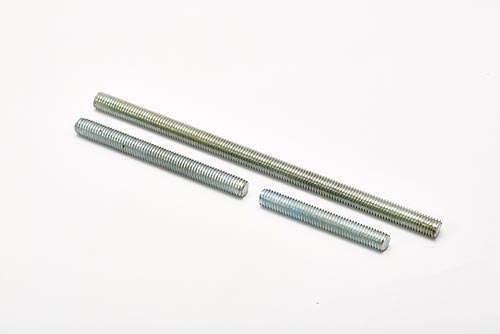
Pre Cut Threaded Rod
Please select product options below -
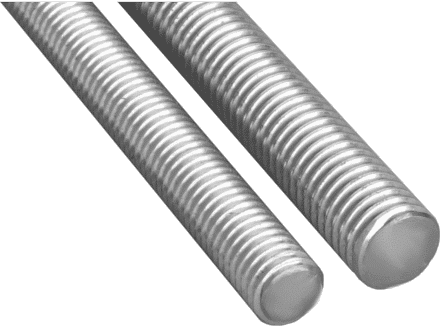
M6 Threaded Rod Bar 1 mtr BZP
£0.60 ex. VAT - £0.72 inc. VAT -
M8 Threaded Rod Bar 1 mtr BZP
£0.90 ex. VAT - £1.08 inc. VAT -
M10 Threaded Rod Bar 1 mtr BZP
£1.30 ex. VAT - £1.56 inc. VAT -
M12 Threaded Rod Bar 1 mtr BZP
£2.10 ex. VAT - £2.52 inc. VAT -
M16 Threaded Rod Bar 1 mtr BZP
£3.60 ex. VAT - £4.32 inc. VAT -
M8 Threaded Rod Bar 1 mtr HDG
£1.24 ex. VAT - £1.49 inc. VAT -
M10 Threaded Rod Bar 1 mtr HDG
£1.50 ex. VAT - £1.80 inc. VAT -
M12 Threaded Rod Bar 1 mtr HDG
£2.70 ex. VAT - £3.24 inc. VAT -
M16 Threaded Rod Bar 1 mtr HDG
£5.00 ex. VAT - £6.00 inc. VAT -
Threaded Rod - M6 x 3mtr BZP
£1.20 ex. VAT - £1.44 inc. VAT -
Threaded Rod - M8 x 3mtr BZP
£1.74 ex. VAT - £2.09 inc. VAT -
M10 Threaded Rod 3m
£2.52 ex. VAT - £3.02 inc. VAT -
Threaded Rod - M12 x 3mtr BZP
£4.44 ex. VAT - £5.33 inc. VAT -
Threaded Rod - M16 x 3mtr BZP
£7.50 ex. VAT - £9.00 inc. VAT
Exploring Threaded Rod Uses in DIY and Professional Projects
If you've ever tackled a DIY project or found yourself needing to hang something heavy, you might have come across threaded rod. This unassuming piece of hardware might look simple, but it packs a surprising amount of versatility and strength.
Here, we'll break down everything you need to know about threaded rod. From understanding its uses and applications to navigating sizes, grades, and safety tips, we'll provide a comprehensive guide for both beginners and seasoned DIY enthusiasts. Let's learn more about this surprisingly handy tool.
Table of Contents:
- What Is Threaded Rod?
- Common Applications
- Understanding Sizes and Grades
- Diameter
- Grades and Tensile Strength
- Working with Threaded Rod
- Cutting Rod to Length
- Joining and Extending Threaded Rod
- Securing Threaded Rod
- Safety Considerations
- FAQs
- What is threaded rod used for?
- Is threaded rod as strong as a bolt?
- What is another name for a threaded rod?
- Is a threaded rod a stud?
- Conclusion
What Is Threaded Rod?
Threaded rod, also know as threaded bar or all-thread, is a long metal rod with a continuous thread running along its entire length. Imagine a very long bolt, but without a head.
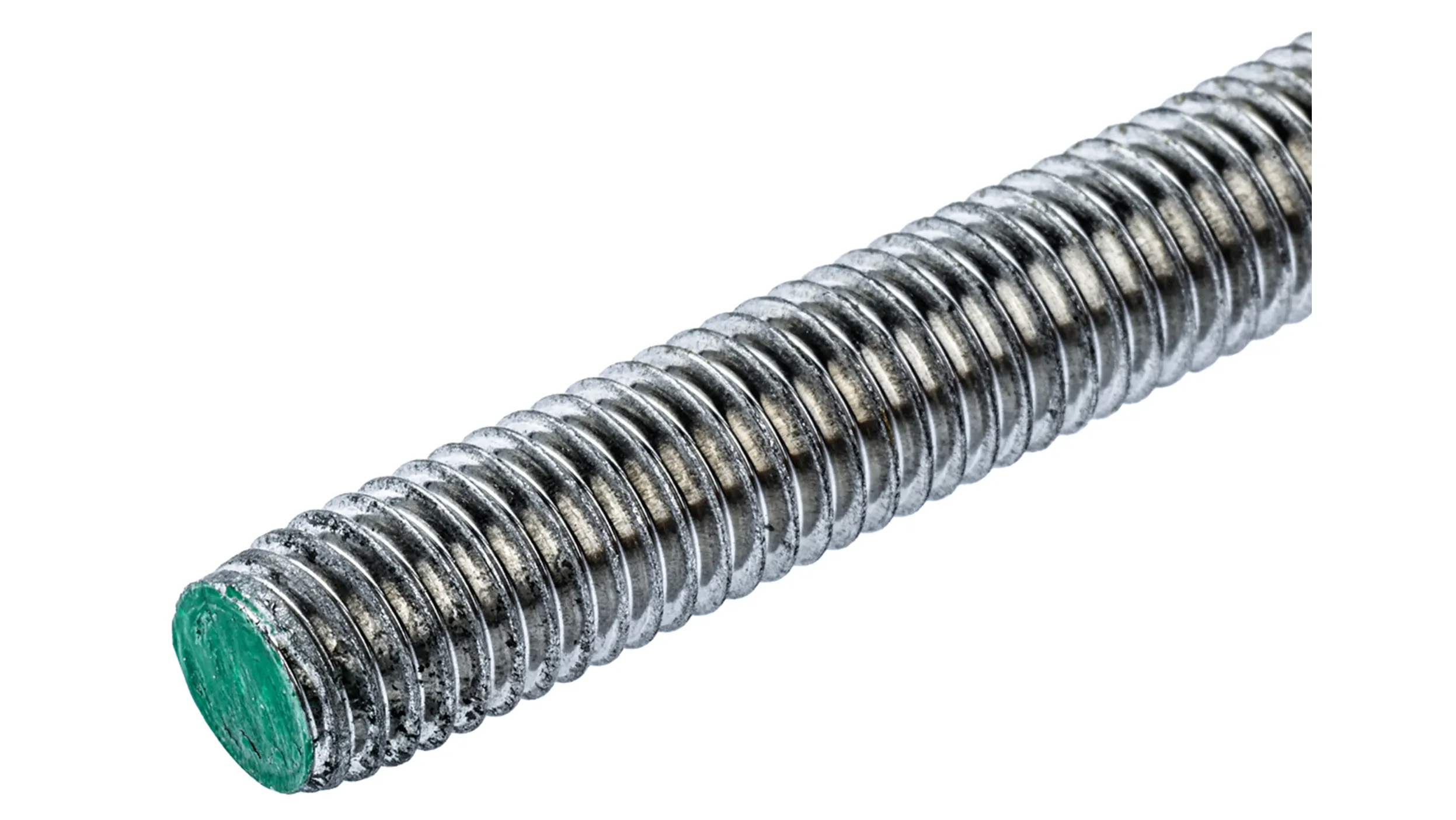
This design makes it incredibly adaptable for various uses. You'll find threaded rod made from various metals like steel (both mild steel and high-tensile steel), stainless steel, and brass.
Common Applications
It is a versatile hardware component used across a wide array of projects and industries. Some common applications include:
- Hanging heavy objects: Use it to suspend lighting fixtures, signs, or even heavy equipment.
- Construction and building: It's vital in securing frameworks, bracing walls, and creating supports in residential and commercial construction.
- Plumbing and electrical installations: Threaded rod provides support for pipes, conduits, and cable tray, keeping them securely in place.
- Furniture making: Craft sturdy legs, supports, or decorative elements for custom-made furniture using threaded rod.
Whether you're working on a small DIY project or a large-scale industrial endeavour, the adaptability of this product makes it an indispensable tool.
Understanding Sizes and Grades
This product comes in various sizes and grades, each designed for specific load-bearing capacities and environments.
Diameter
Diameter, often called "bolt size", is measured in millimetres (mm). The most common sizes range from M6 to M20, but larger diameters are available for heavy-duty jobs.
Diameter (M) refers to the size of the metric thread on a bolt or screw. The common applications for different diameters are as follows:
- M6: This size is commonly used for small DIY projects, such as assembling furniture or fixing small items. It is also suitable for light fixtures and securing brackets in place.
- M8: The M8 diameter is ideal for hanging medium-weight objects, such as mirrors or artwork, as well as for installing shelves and plumbing fixtures. It provides a sturdy and reliable hold for these types of applications.
- M10 & M12: These larger diameters are used for heavy-duty applications, such as building construction and securing large equipment. They provide a strong and durable connection that can withstand significant weight and pressure.
- M16, M20 & beyond: These larger diameter sizes are typically used for industrial applications, infrastructure projects, and situations where extreme loads are present. They are commonly found in large-scale construction projects, such as bridges, buildings, and other structures that require a high level of strength and stability.
Overall, the diameter of a bolt or screw plays a crucial role in determining its strength and suitability for different applications.
By choosing the right diameter for the job at hand, you can ensure a secure and reliable connection that will withstand the demands of the task.
Grades and Tensile Strength
The grade of the rod determines its tensile strength, indicating how much pulling force it can handle before breaking. Selecting the right grade for your project's requirements is crucial.
Grades are usually represented by numbers (e.g., 4.8, 8.8) or property classes (e.g., A2 stainless steel). Higher numbers or property classes mean a stronger rod. Mild steel is common for less demanding tasks. High tensile steel grades, like 8.8, offer more robust support for heavier loads.
A2 stainless steel, often preferred for applications requiring corrosion resistance, is a popular choice for outdoor and moisture-prone environments. Make sure the grade suits your project's strength and environmental demands.
Working with Threaded Rod
While it might appear a simple product, using it effectively involves understanding a few key techniques:
Cutting Rod to Length
Cutting a threaded bar to the desired size is often necessary. While hacksaws can work, a high-quality bolt cutter is your best bet, especially with harder metals like bright zinc plated steel. This ensures a clean, accurate cut without damaging the threads.
Fortunately, we have a bespoke cutting service to serve your exact needs.
Let us do the work required to create the exact size of threaded rod you require for your projects.
Click here to order your cut rod
Joining and Extending Threaded Rod
Need a longer length than what's readily available? Threaded rod couplers, also known as extension nuts, provide a seamless solution. These connectors join two rods, creating a secure, continuous length.
Choose couplers matching the thread size and grade of your rod for optimal strength and stability. For instance, if you're working with M10 threaded rod, ensure you use M10 couplers.
Securing Threaded Rod
Nuts, washers and locking mechanisms play a critical role in securing the rod firmly in place. The key is selecting the right combination based on your project's demands. Hex nuts paired with washers are suitable for most applications.
If you require extra vibration resistance, consider Nyloc nuts. These specialized nuts feature a nylon insert that prevents loosening, making them ideal for machinery or applications prone to movement.
Safety Considerations
Prioritizing safety when working with threaded rod is paramount. Always wear appropriate safety glasses, especially when cutting. Protect your hands from sharp edges by using gloves.
By being mindful of these safety measures and wearing proper personal protective equipment, you can minimize the risk of accidents and ensure a safe working environment for your projects.
FAQs
What is threaded rod used for?
Threaded rod boasts exceptional versatility, making it invaluable for a multitude of applications. Whether you're hanging heavy items like chandeliers or creating sturdy supports for shelves, this product is up to the task.
Its uses extend to various fields including construction projects that require the use of strut channel, DIY endeavours, plumbing, electrical work and even furniture making.
The continuous threading along its length facilitates easy and secure fastening using nuts, square plate washers, or other compatible fasteners, allowing for adjustable and dependable results.
Is threaded rod as strong as a bolt?
Yes, it can be just as strong as a bolt, provided they share the same diameter and material grade. For instance, a grade 8.8 threaded rod exhibits comparable strength to a grade 8.8 bolt of the same size.
The material grade plays a significant role in determining its strength and load-bearing capacity. Understanding the different grades of steel, stainless steel, or other materials used for threaded rods will guide you in choosing the right one for your project.
What is another name for a threaded rod?
Threaded rod is frequently referred to as all-thread, aptly named for its fully threaded design along its entire length. This distinguishes it from other fasteners like studs, which typically have threads only at the ends. Other commonly used names include studding or threaded bar, although the latter might also describe a non-threaded metal bar.
Is a threaded rod a stud?
While often used interchangeably, threaded rod and stud are not technically the same. A threaded rod is fully threaded along its length. Conversely, studs usually have threaded sections on both ends with a smooth, unthreaded shank in the middle.
This difference in design makes studs suitable for specific applications, like fastening engine components, where a smooth shank is necessary for proper alignment and fit. However, when a threaded rod is cut to a specific length and used in a similar manner as a stud, it is common practice to refer to it as a "stud."
What finishes does it come in?
Threaded rods and studs come in a variety of finishes to suit different applications and environments. Some common finishes include plain (uncoated), zinc-plated, hot-dip galvanized, and stainless steel.
The plain finish is suitable for indoor use where corrosion resistance is not a concern.
Zinc-plated rods and studs are ideal for applications where some corrosion resistance is needed, but not in highly corrosive environments.
Hot-dip galvanized finishes provide a higher level of corrosion resistance, making them suitable for outdoor use or in areas with high moisture levels.
Stainless steel finishes offer the highest level of corrosion resistance and are often used in marine or chemical environments.
The choice of finish will depend on the specific requirements of the application and the level of protection needed against corrosion.
Conclusion
Threaded rod, despite its unassuming appearance, proves to be a remarkably versatile and essential hardware component for countless projects. Its simplicity, combined with its strength and adaptability, makes it an invaluable asset for both DIY enthusiasts and professionals across various fields.
By understanding the different sizes, grades, and securement techniques, you can confidently incorporate threaded rod into your projects. Whether you're tackling a simple repair, embarking on a complex construction endeavour, or adding a personal touch to your furniture, threaded rod provides the reliability and strength you need to get the job done right. Just remember to prioritize safety and wear appropriate personal protective equipment to prevent accidents and injuries.